
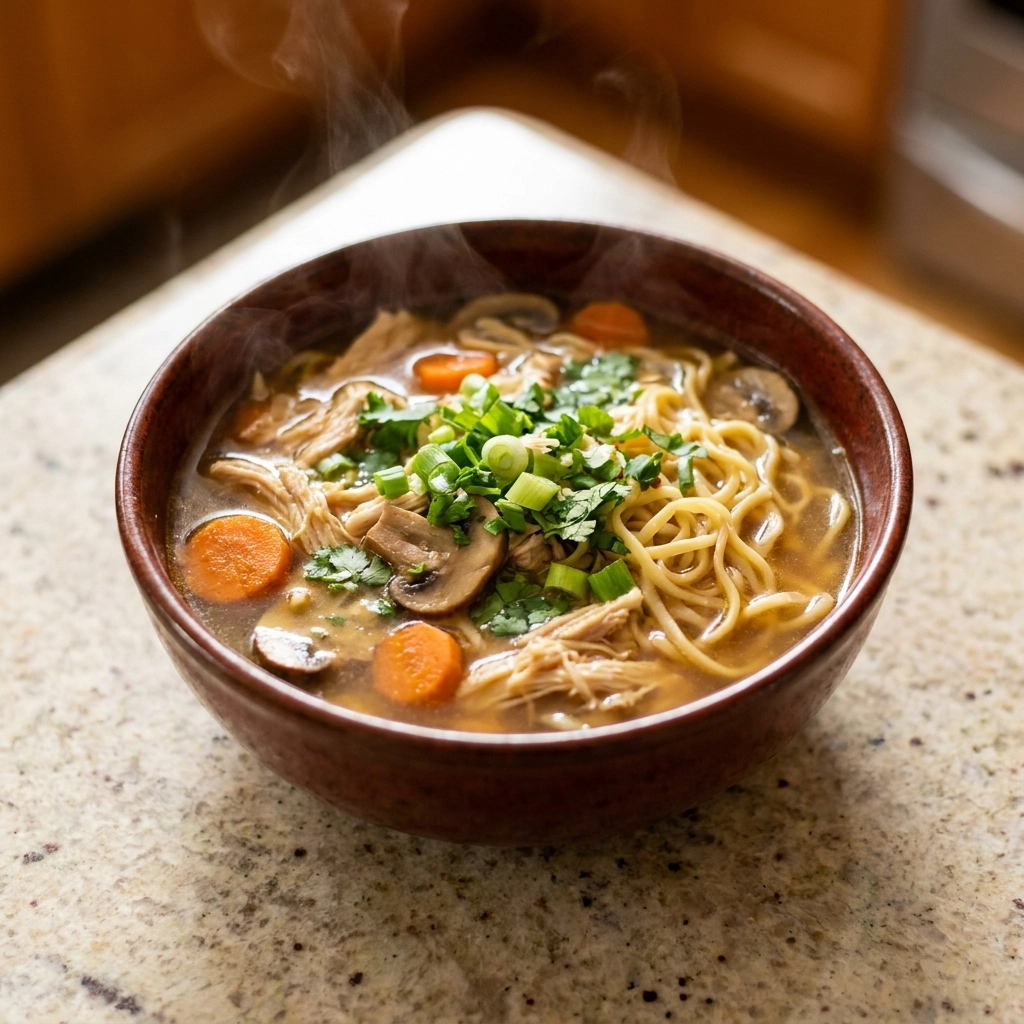
Introduction |
The first time I simmered this broth, the scent of toasted ginger and pungent garlic hit me like a physical force, filling the entire kitchen with a sharp, aromatic heat. I remember the sound of the pot bubbling violently, releasing steam that smelled of fermented soy and fresh scallions, signaling that the base was finally concentrating into something potent.
The defining characteristic of this bowl is the aggressive contrast between the silky, slippery texture of the noodles and the snap of fresh, lightly wilted bok choy. That specific tension between soft and crisp ensures that every single spoonful provides a different tactile experience, preventing the palate from becoming bored with the richness of the chicken stock.
- ●Concentrated umami depth from the combination of soy and fish sauce.
- ●Rapid cook time that fits into a busy professional schedule.
- ●High protein content paired with hydrating, nutrient-dense vegetables.
- ●Flexible base that accommodates various types of Asian wheat or rice noodles.
- ●Clean, sharp finish that cuts through the heaviness of traditional stews.
Essential Ingredients |
Chicken Breast is biologically designed for lean protein delivery; use it here to provide substantial, tender chunks that absorb the salty broth.
Fresh Ginger contains gingerol, a potent bioactive compound; it provides the necessary spicy undertone and warmth to the liquid base.
Garlic is a member of the Allium family known for its sulfur compounds; it adds a pungent, savory depth that anchors the lighter flavors.
Soy Sauce is a fermented legume product that acts as a chemical flavor enhancer; it provides the deep brown color and saltiness.
Fish Sauce is produced through the anaerobic fermentation of anchovies; it adds a hidden layer of funk and salinity that soy sauce alone lacks.
Bok Choy is a cultivar of the cabbage species; its thick white stems provide a watery crunch against the tender meat.
Egg Noodles are made with alkaline water to prevent them from becoming mushy; they provide the structural heart of the dish.
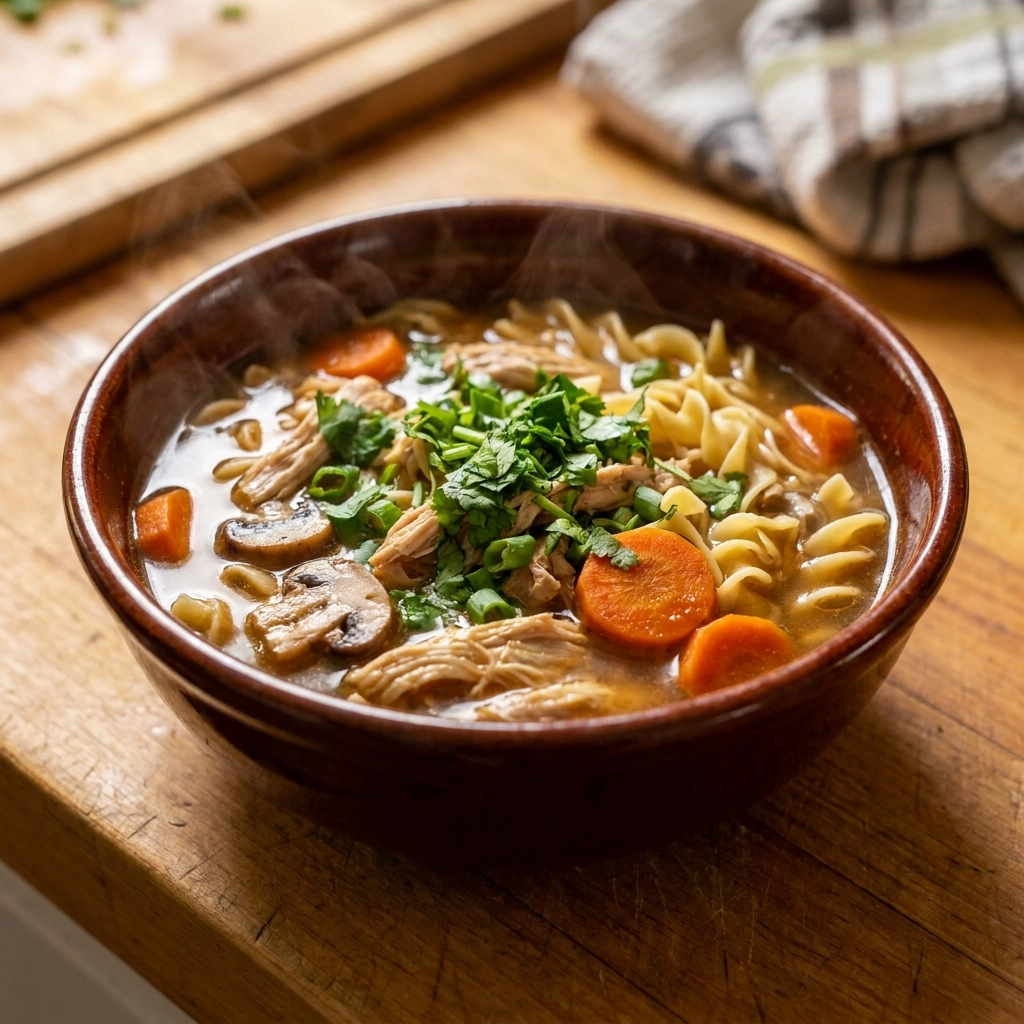 Let’s Make it Together |
- To prevent the garlic from burning and becoming bitter, sauté it and the ginger in oil over medium heat for exactly 60 seconds.
- To build a foundational layer of flavor, stir in the soy sauce and fish sauce, letting them caramelize slightly before adding liquid.
- To create a cohesive broth, pour in the chicken stock and bring the mixture to a rolling boil.
- To ensure the meat remains tender and does not overcook, add the sliced chicken breast and simmer for only five to seven minutes.
- To maintain the integrity of the vegetables, add the bok choy in the final two minutes of cooking so they stay crisp.
- To avoid a starchy, gummy soup, cook the noodles in a separate pot of boiling water and add them to the bowls immediately before pouring in the broth.
Precision is everything.
Never boil the noodles directly in the soup as they release starch that thickens the broth too much.
Avoid using low-sodium stock if you want the traditional, bold salt profile of this region.
Ensure the chicken is sliced across the grain to maximize tenderness in every bite.
Do not overcook the ginger or it will transition from spicy to an unpleasant bitterness.
Squeeze fresh lime juice in at the very end to brighten the heavy soy notes.
Perfecting the Cooking Process |
Temperature control is the primary factor in the success of the broth. Keep the heat at a steady simmer rather than a violent boil once the chicken is added; high heat toughens the protein fibers, resulting in a rubbery texture. Use a digital thermometer to ensure the broth remains around 200°F (93°C) for the duration of the simmer.
Timing the vegetable addition is a critical technical step. Bok choy should only be exposed to the heat for 120 seconds. This brief window allows the leaves to soften while the stems retain their cellular structure, providing the essential snap that balances the softness of the noodles.
Add Your Touch |
To shift the flavor profile or meet dietary needs, consider these five variations: swap chicken for extra-firm tofu for a plant-based version, replace soy sauce with liquid aminos for a gluten-free alternative, add a tablespoon of miso paste for a creamier, fermented depth, stir in sriracha or chili oil for a spicy kick, or use rice noodles for a lighter, gluten-free texture.
Seasonal adaptations also work well here. In winter, add sliced carrots and parsnips for extra heartiness, while in summer, load the bowl with fresh bean sprouts and a handful of cilantro to keep the dish feeling light and refreshing.
Storing & Reheating |
Store the broth and chicken in an airtight container in the refrigerator for up to three days. To prevent the noodles from absorbing all the liquid and becoming bloated, store them in a separate container or discard them and boil fresh ones when reheating.
Reheat the broth on the stovetop over medium heat until it reaches a simmer. Avoid the microwave if possible, as it can create hot spots that overcook the chicken and make the meat tough.
1Toast your sesame oil briefly before adding it to the pot to unlock a nuttier aroma.
2Use a sharp chef’s knife to create uniform chicken slices for even cooking.
3Skim the foam off the top of the broth to ensure a crystal-clear appearance.
4Add a pinch of sugar to balance the saltiness of the fish sauce.
5Garnish with sliced scallions at the absolute last second for maximum freshness.
FAQ |
- ●Q: Can I use frozen chicken breast?A: You must thaw the chicken completely in the refrigerator before cooking. Adding frozen meat directly to the broth drops the temperature too sharply, resulting in unevenly cooked chicken and a diluted flavor profile.
- ●Q: Which noodles are best for this recipe?A: Alkaline wheat noodles are the standard because they hold their shape under heat. However, you can use rice noodles for a lighter feel, though you must cook them separately to avoid clouding the soup.
- ●Q: How do I make the broth more intense?A: To increase the depth, simmer the broth for an additional twenty minutes without the chicken and vegetables. This reduces the water content and concentrates the soy, ginger, and garlic flavors into a more potent syrup.
- ●Q: What is the best substitute for fish sauce?A: A mixture of soy sauce and a pinch of salt works, but for the authentic funk, use a small amount of Worcestershire sauce. It provides a similar fermented depth that mimics the complexity of fish sauce.
Salty and Sharp Asian Chicken Noodle Soup
A bold, savory Asian-inspired chicken noodle soup featuring a rich ginger-garlic broth and crisp bok choy.
- Prep Time: 15 minutes
- Cook Time: 20 minutes
- Total Time: 35 minutes
- Yield: 4 servings 1x
- Category: Dinner
- Method: Simmering
- Cuisine: Asian
Ingredients
- 1 lb chicken breast, thinly sliced
- 6 cups chicken stock
- 2 tbsp soy sauce
- 1 tbsp fish sauce
- 1 tbsp fresh ginger, minced
- 3 cloves garlic, minced
- 2 cups bok choy, chopped
- 8 oz egg noodles
- 1 tbsp sesame oil
- 2 scallions, sliced
Instructions
- Heat sesame oil in a large pot over medium heat.
- Sauté minced garlic and ginger for 60 seconds.
- Stir in soy sauce and fish sauce, cooking for 30 seconds.
- Pour in chicken stock and bring to a boil.
- Add sliced chicken breast and simmer for 5-7 minutes.
- Add bok choy and cook for 2 more minutes.
- Cook noodles separately according to package instructions.
- Divide noodles into bowls and pour the hot soup over them.