
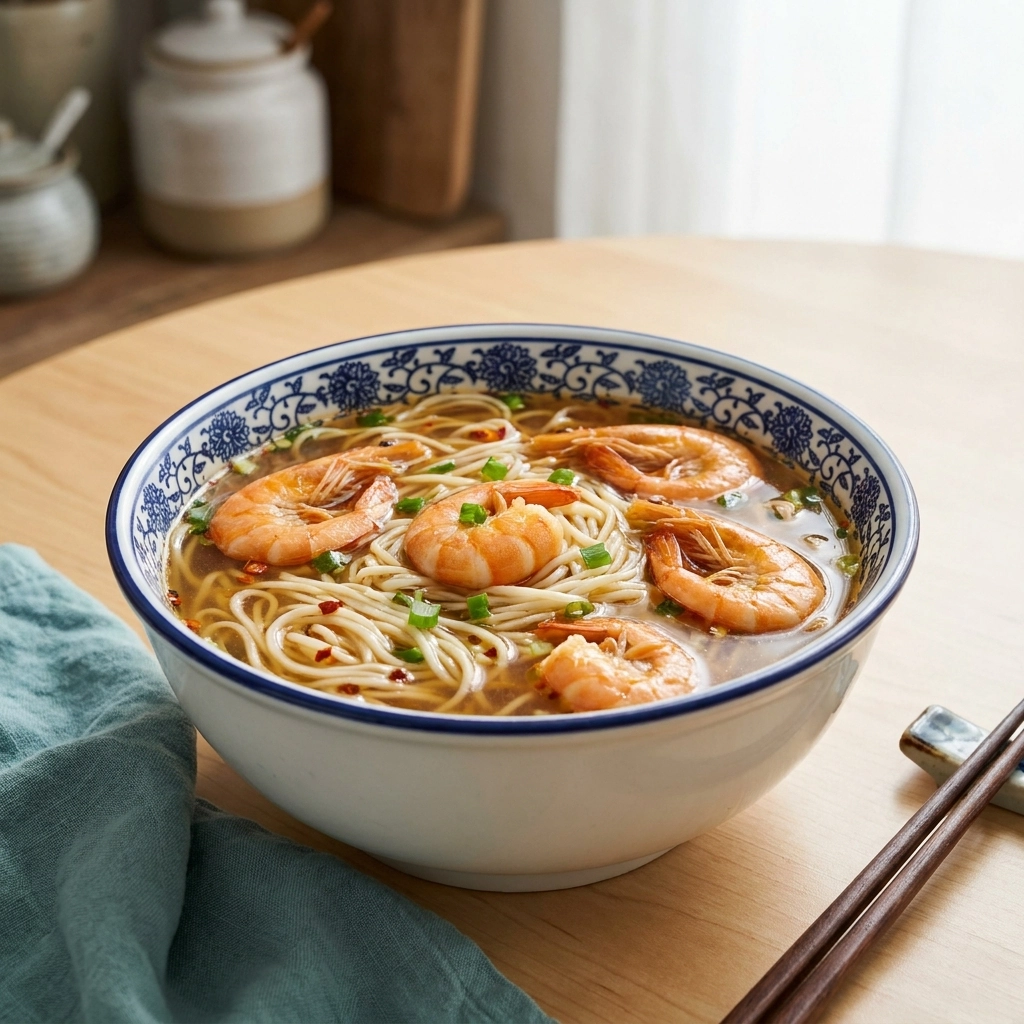
Chinese Shrimp Noodle Soup |
This soup hits hard.
The first time I simmered this broth, the scent of toasted sesame oil and pungent ginger filled every corner of my kitchen, cutting through the damp evening air. I remember the sound of the shrimp hitting the hot wok, a sharp hiss that signaled the start of a meal designed to restore balance and warmth to the body.
I watched the steam rise in thick clouds, carrying the brine of the ocean and the earthy depth of soy. The texture of the noodles provided a necessary contrast to the snap of the shrimp, creating a cohesive experience that felt like a culinary embrace after a long day of work.
- ●High protein content from fresh shrimp.
- ●Clean, translucent broth that tastes refined.
- ●Quick turnaround time from prep to table.
- ●Customizable vegetable additions to fit your diet.
- ●Soothes the throat and clears the sinuses with fresh ginger.
Essential Ingredients |
Large Shrimp: Buy wild-caught if possible for a deeper ocean flavor. Skipping these removes the primary protein and the natural sweetness they lend to the stock.
Egg Noodles: Use high-alkaline wheat noodles for that specific yellow hue and springy bite. Using pasta instead will result in a mushy texture that lacks authenticity.
Fresh Ginger: Organic root is preferred for its potent heat. Without ginger, the broth becomes flat and loses its medicinal, warming quality.
Garlic: Fresh cloves beaten pre-minced jars. Omitting garlic strips the base of its essential aromatic foundation.
Chicken Stock: Low-sodium is best so you can control the salt. Using water instead will leave the soup tasting thin and devoid of complexity.
Soy Sauce: A light soy sauce keeps the broth clear. Using a dark variety will turn the soup a muddy brown and overpower the delicate shrimp.
Sesame Oil: Toasted oil provides the signature nutty finish. Without it, the dish lacks the traditional aromatic bridge that ties the ingredients together.
 Let’s Make it Together |
- Sauté the minced garlic and ginger in a large pot over medium heat until fragrant. Pro tip: Do not let the garlic brown or it will turn bitter.
- Pour the chicken stock into the pot and bring the liquid to a rolling boil.
- Simmer the broth on low heat for ten minutes to allow the aromatics to infuse. Your pan should be barely bubbling at this stage to prevent clouding the stock.
- Boil the egg noodles in a separate pot of water according to package directions. Pro tip: Rinse them in cold water immediately after draining to stop the cooking process.
- Sear the shrimp in a small amount of oil for two minutes per side until pink. Trust your nose here; they are finished the moment they smell toasted and look opaque.
- Combine the noodles and seared shrimp into the simmering broth just before serving. Pro tip: Add the noodles last to prevent them from absorbing all the liquid.
Never overcook the shrimp or they will become rubbery.
Always boil noodles separately to keep the broth clear.
Avoid using high heat when adding soy sauce to prevent scorching.
Rinse your shrimp thoroughly to remove any grit.
Add green onions only at the final second for maximum color.
Perfecting the Cooking Process |
You’ll notice that temperature control is the difference between a cloudy soup and a crystal-clear one. Keep the broth at approximately 190°F to 200°F. If the broth boils violently, the fats emulsify into the liquid, creating a murky appearance that lacks the refined look of professional Chinese soups.
The science of the ‘snap’ in the shrimp depends on the Maillard reaction. shrimp separately at high heat for a short burst, you lock in moisture and create a flavorful crust. Adding them directly to the simmering broth would poach them, which is acceptable, but lacks the depth of flavor provided by a quick sear.
Timing the noodles is critical. Alkaline noodles continue to absorb water even after being removed from the pot. in cold water and adding them to the bowl at the last moment, you ensure the noodle maintains a firm, bouncy structure rather than turning into a soft paste.
Add Your Touch |
You’ll notice that adding a handful of ba or sliced bamboo shoots increases the nutritional value and adds a refreshing crunch. For a spicier version, stir in a teaspoon of chili bean paste or a drizzle of Szechuan peppercorn oil.
Substitute the shrimp with scallops or firm tofu for a different protein profile. If you prefer a richer mouthfeel, whisk in a small cornstarch slurry at the end to slightly thicken the broth into a velouté consistency.
Storing & Reheating |
Store the broth and the cooked noodles in separate airtight containers in the refrigerator. This prevents the noodles from swelling and turning the soup into a thick porridge over time.
Reheat the broth on the stove until simmering, then drop in the pre-cooked noodles and shrimp for sixty seconds. This ensures the seafood does not overcook while the broth returns to the correct temperature.
1Use a wide-bottomed pot to ensure even heat distribution across the aromatics.
2Pat the shrimp dry with paper towels before searing to avoid splashing oil.
3Squeeze a wedge of lime into the bowl to brighten the heavy soy notes.
4Keep your noodles submerged in water until the exact moment of assembly.
5Taste the broth frequently and adjust salt levels only at the very end.
FAQ |
- ●Q: Can I use frozen shrimp for this recipe?A: Yes, you can use frozen shrimp, but you must thaw them completely in a bowl of cold water and pat them dry with a towel. If you add frozen shrimp directly to the pan, they will release excess water and steam instead of searing, which ruins the flavor profile.
- ●Q: What is the best substitute for egg noodles?A: Rice noodles or Soba noodles work well as alternatives. Rice noodles offer a gluten-free option and a softer texture, while Soba adds a nutty buckwheat flavor. Ensure you cook them separately to maintain the clarity of your shrimp broth.
- ●Q: How do I stop the broth from tasting too salty?A: If the broth is too salty, add a small splash of rice vinegar or a pinch of sugar to balance the sodium. You can also dilute the soup with a bit more unsalted chicken stock or water, though this may slightly weaken the overall intensity.
- ●Q: Why are my noodles sticking together?A: This happens when noodles are not rinsed in cold water after boiling. The residual starch on the surface acts like glue. Rinsing them effectively removes that starch and stops the cooking process, keeping the strands distinct and slippery.
Authentic Chinese Shrimp Noodle Soup
A savory, aromatic Chinese soup featuring snappy shrimp and springy egg noodles in a clear, ginger-infused broth.
- Prep Time: 15 minutes
- Cook Time: 25 minutes
- Total Time: 40 minutes
- Yield: 4 servings 1x
- Category: Dinner
- Method: Stovetop
- Cuisine: Chinese
Ingredients
- 1 lb large shrimp, peeled and deveined
- 8 oz egg noodles
- 6 cups low-sodium chicken stock
- 3 cloves garlic, minced
- 2 inches fresh ginger, minced
- 2 tbsp soy sauce
- 1 tbsp toasted sesame oil
- 2 green onions, sliced
Instructions
- Sauté garlic and ginger in a pot over medium heat.
- Add chicken stock and simmer for 10 minutes.
- Boil egg noodles separately, drain and rinse with cold water.
- Sear shrimp in a separate pan until pink and opaque.
- Stir soy sauce into the broth.
- Divide noodles into bowls, top with shrimp, and pour broth over them.
- Garnish with sliced green onions.