
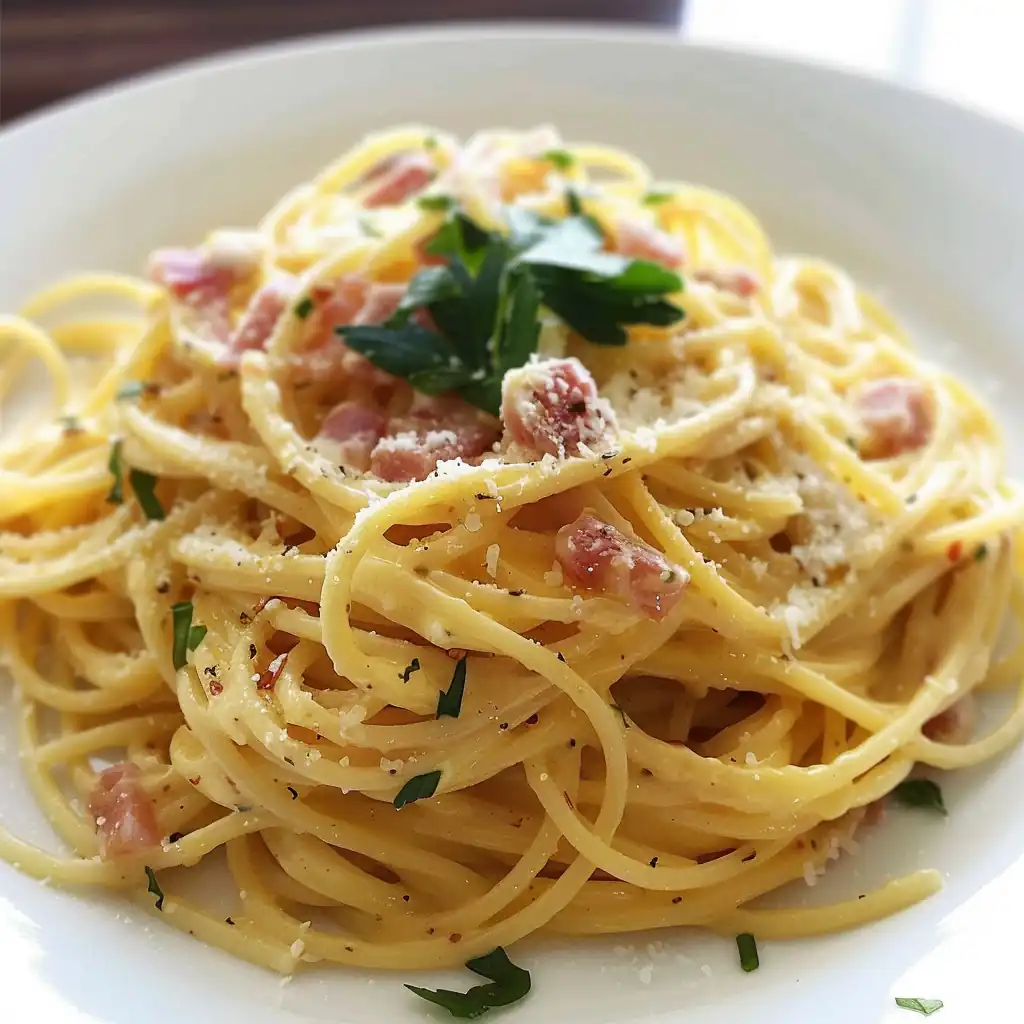
Carbonara is an art of timing. |
I once turned a beautiful dinner party into a scrambled egg disaster because I thought high heat was the secret to a thick sauce. I poured the egg mixture into a sizzling pan, and within seconds, I had pasta with omelet chunks instead of a silky emulsion, leaving me humbled and hungry.
That failure taught me that the magic of a true Roman carbonara lies in residual heat and gentle tempering. Once I mastered the balance between the hot noodles and the cool egg mixture, I realized that simplicity is actually the most difficult part of this culinary puzzle.
- ●The creamy texture is achieved without a single drop of heavy cream.
- ●It requires only a handful of pantry staples for a gourmet result.
- ●The salty punch of cured pork cuts through the richness of the eggs.
- ●It comes together in the time it takes to boil a pot of water.
- ●The technique is a fundamental skill that elevates your entire pasta game.
Essential Ingredients |
Spaghetti: The starch released from the durum wheat acts as a natural binding agent, allowing the sauce to cling to the noodles rather than pooling at the bottom of the bowl.
Eggs: The lecithin in the yolks serves as a powerful emulsifier, bridging the gap between the rendered pork fat and the pasta water to create a creamy, cohesive glaze.
Pecorino Romano: This salty, sheep’s milk cheese contains proteins that thicken the sauce, while its sharp acidity balances the heavy fats of the pork and eggs.
Guanciale or Pancetta: The high fat content provides the primary cooking medium and a deep, smoky flavor profile that defines the authentic Roman taste.
Black Pepper: Piperine in the pepper provides a pungent heat that cuts through the richness of the yolks, preventing the dish from tasting overly heavy.
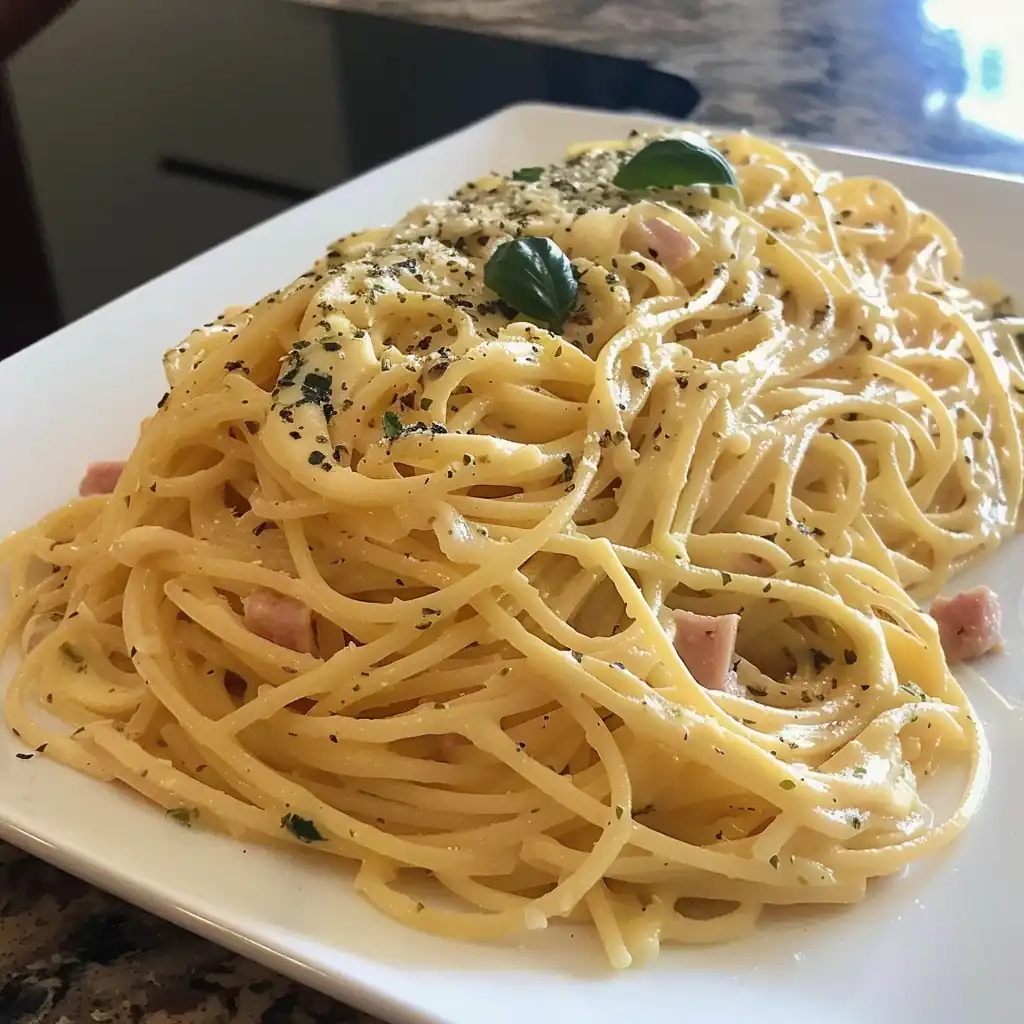 Let’s Make it Together |
- Boil a large pot of salted water and drop the spaghetti, cooking until just shy of al dente.
- Sear the diced guanciale in a wide skillet over medium heat until the fat renders out and the meat becomes golden and crisp. Pro tip: Start with a cold pan to render the fat more efficiently.
- Whisk the eggs and grated Pecorino Romano in a small bowl until a thick, pale yellow paste forms.
- Reserve one cup of the starchy pasta water before draining the noodles completely.
- Fold the hot pasta into the skillet with the crispy pork, tossing thoroughly to coat every strand in the rendered fat. Pro tip: Lower the heat to the minimum setting before adding the pasta to avoid overheating.
- Remove the pan from the heat entirely and quickly stir in the egg and cheese mixture, adding splashes of pasta water to create a glossy, creamy emulsion. Pro tip: Stir vigorously and constantly for 60 seconds to prevent the eggs from curdling.
Never add the egg mixture while the pan is still on an active burner.
Use room temperature eggs to ensure a smoother emulsion with the cheese.
Avoid using pre-grated cheese as the anti-clumping agents prevent a smooth sauce.
The pasta water is your liquid gold; do not discard it all.
Black pepper should be freshly cracked for the most potent aroma.
Perfecting the Cooking Process |
Temperature control is the singular most important factor in this recipe. If the pan is above 180°F when the eggs hit, you will create scrambled eggs. pan from the heat source, you utilize the residual thermal energy of the pasta to cook the eggs gently, creating a custard-like consistency rather than a solid clump.
Timing the boil is equally critical. You want the noodles to finish their final minute of cooking inside the pan with the fat and cheese. This allows the pasta to absorb the flavors of the pork while releasing a final burst of starch that stabilizes the sauce.
Add Your Touch |
But here’s the thing: while tradition is king, a touch of lemon zest folded in at the end provides a bright, citrusy lift that cuts through the richness. Alternatively, adding a handful of frozen peas during the last two minutes of boiling adds a pop of color and sweetness.
That’s exactly why some prefer substituting Guanciale with smoked bacon for a more Americanized, woody flavor. You can also swap half of the Pecorino for Parmigiano-Reggiano if you find the sheep’s milk cheese too aggressive for your palate.
Storing & Reheating |
Once the oil shimmers and the meal is plated, leftovers should be stored in an airtight container in the fridge for no more than 3 days. Do not freeze this dish; the emulsion of egg and cheese will break upon thawing, leaving you with a grainy, separated mess that cannot be restored.
To reheat, avoid the microwave as it will overcook the eggs. Instead, gently warm the pasta in a skillet over low heat, adding a tablespoon of water or cream to loosen the sauce and bring back the creamy texture without scrambling the eggs.
1Use a wide skillet rather than a deep pot for better heat distribution.
2Sift your Pecorino through a fine grater for an instant melt.
3Temper your eggs a spoonful of pasta water first.
4Sauté the pork until the edges are dark brown for maximum depth.
5Plate the pasta on warm bowls to keep the sauce creamy longer.
FAQ |
- ●Q: Why does my Carbonara keep turning into scrambled eggs?A: This happens because the pan is too hot when the eggs are added. To fix this, remove the pan from the stove entirely and let it cool for 30 seconds before stirring in the egg mixture, using the residual heat of the pasta to cook the sauce.
- ●Q: Can I use cream to make it easier?A: While cream provides a shortcut to creaminess, authentic Carbonara relies on the emulsion of egg, cheese, and pasta water. Adding cream masks the flavor of the pork and cheese and changes the fundamental chemistry of the dish, making it a different recipe entirely.
- ●Q: What is the best substitute for Guanciale?A: Pancetta is the best alternative as it is also a cured pork product. If neither is available, high-quality thick-cut bacon works well, though you should reduce the added salt in the pasta water to compensate for the extra smokiness of the bacon.
- ●Q: How do I get the sauce to be extra glossy?A: The secret is the starchy pasta water. By adding a small amount of the salty, cloudy water while stirring vigorously, you create a stable emulsion that coats the noodles in a shimmering, velvet-like glaze rather than a dry coating.
The Ultimate Easy Spaghetti Carbonara: A Roman Classic
A classic Roman pasta dish featuring a rich, creamy emulsion of eggs and Pecorino Romano, tossed with crispy guanciale and al dente spaghetti.
- Prep Time: 10 minutes
- Cook Time: 15 minutes
- Total Time: 25 minutes
- Yield: 4 servings 1x
- Category: Dinner
- Method: Stovetop
- Cuisine: Italian
Ingredients
- 1 lb Spaghetti
- 5 oz Guanciale or Pancetta, diced
- 3 large Eggs (2 whole, 1 yolk)
- 1 cup Pecorino Romano, freshly grated
- 1 tsp Freshly cracked black pepper
- Salt for pasta water
Instructions
- Boil spaghetti in salted water until just under al dente.
- Sauté diced guanciale over medium heat until crispy and fat is rendered.
- Whisk eggs and Pecorino Romano together in a bowl until thick.
- Reserve 1 cup of pasta water, then drain the noodles.
- Toss the pasta into the pan with the guanciale and fat over low heat.
- Remove pan from heat and stir in the egg mixture and pasta water until creamy.