
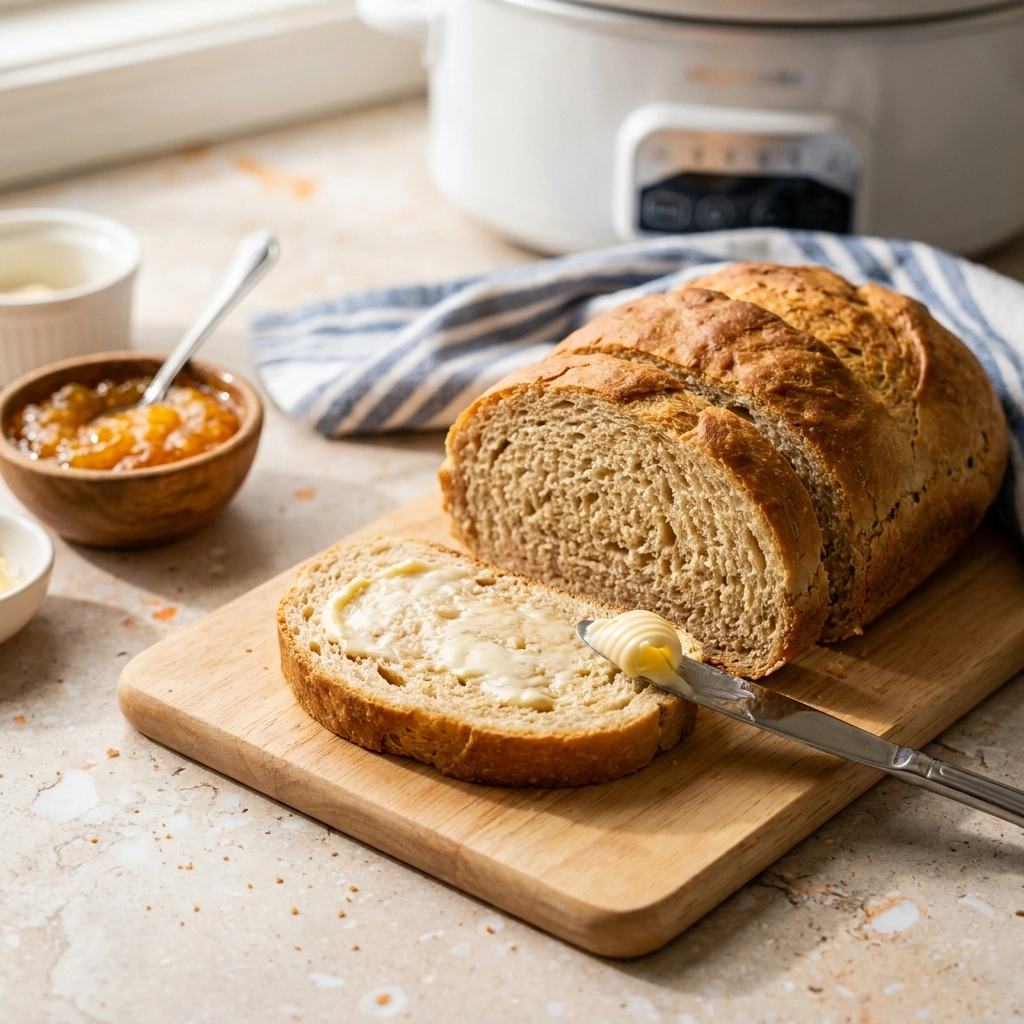
Imagine waking up to the scent of warm yeast and toasted grains wafting through your home. I remember a rainy Tuesday when I craved a thick slice of buttered toast but felt too exhausted to tackle the grueling process of kneading dough. I wanted something effortless yet deeply comforting.
That longing led me to discover the magic of using a crockpot for baking. This method transforms a few simple pantry staples into a hearty, rustic loaf. It is truly a revelation for anyone who finds traditional baking intimidating.
Home bakers adore this approach because it removes the physical labor of punching and folding. You simply mix and wait. The slow heat works a quiet miracle on the gluten structures.
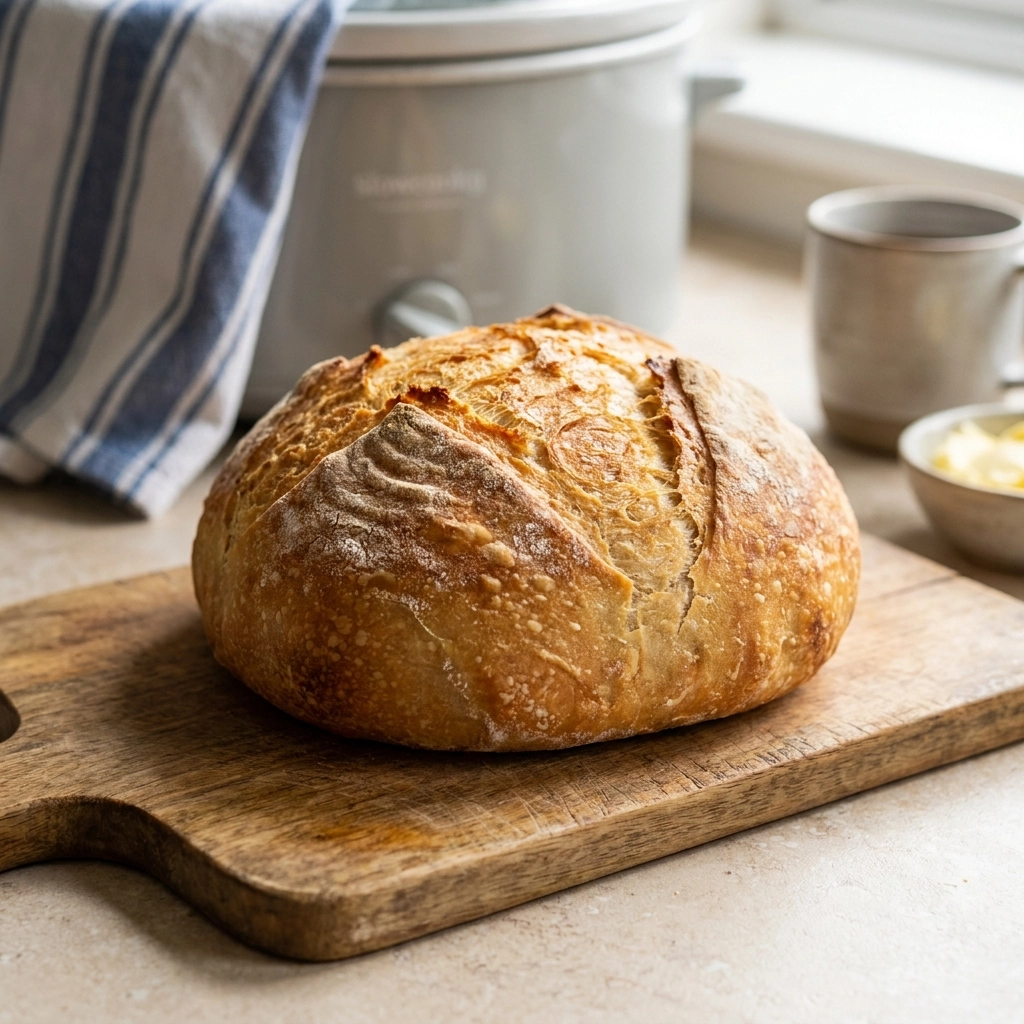
What makes this particular version stand out is the stunning texture contrast. You get a slightly dense, chewy crumb paired with a beautifully steamed, golden-brown exterior. It feels like a professional artisanal loaf made with zero stress.
Forget those preservative-filled store loaves that feel like sponges. This homemade version offers a rich, complex flavor that commercial bread simply cannot replicate. Your taste buds will notice the difference immediately.
If you are a complete novice or a seasoned pro looking for a shortcut, you are in the right place. You absolutely can do this. Luscious Slow Cooker Buttermilk Mashed Potatoes Recipe
Let us dive into the simple steps that will bring fresh, warm bread to your table.
- ●Why You’ll Love This Recipe
- ●A Brief Background / Why This Recipe Works
- ●Perfect For Easy Morning Brunches and Cozy Dinners
- ●Main Ingredient Spotlight: Bread Flour
- ●Secondary Ingredient Spotlight: Active Dry Yeast
- ●Key Ingredients
- ●How to Make It
- ●Pro Tips
- ●Delicious Variations
- ●Best Ways to Serve
- ●Storage and Leftovers
- ●Frequently Asked Questions
- ●Why This Recipe Belongs in Your Weekly Rotation
- ●Final Thoughts
There are so many reasons to fall in love with this method. It turns a high-stress task into a relaxing experience. Aromatic Slow Cooker Sesame Chicken Recipe Delight
- ●Zero kneading is required, saving your arms from fatigue.
- ●The slow cooker provides a controlled environment for the dough.
- ●You use basic ingredients already sitting in your cupboard.
- ●The cleanup is minimal since you use one bowl and one pot.
- ●It yields a consistent result every single time you bake.
- ●The aroma fills the house with a welcoming, cozy vibe.
- ●It is far more affordable than buying artisanal loaves.
- ●The texture is incredibly satisfying and hearty.
- ●It teaches beginners the basics of yeast activation.
- ●The timing allows you to prep other meals simultaneously.
Once you try this, you will never look at your slow cooker as just a stew pot again.
A Brief Background / Why This Recipe Works |
Traditional baking relies on heavy mechanical kneading to develop gluten. This creates the structure that allows bread to rise. However, the slow cooker uses a different approach by utilizing a long, steady application of warmth.
The moisture trapped inside the ceramic pot acts as a makeshift steam oven. This prevents the crust from hardening too quickly. Consequently, the interior stays moist and fluffy while the outside develops a gentle glow.
Yeast thrives in the steady, low heat of a crockpot. It allows the fermentation process to occur slowly and thoroughly. This results in a deeper flavor profile than a quick-rise oven loaf.
Perfect For Easy Morning Brunches and Cozy Dinners |
Imagine starting your Saturday morning on a switch. This bread is a dream for brunches where you want fresh toast but don’t want to spend three hours in the kitchen.
It also serves as the ultimate sidekick for family dinners. Whether you are serving a hearty soup or a rich roast, a warm slice of this bread is the perfect vessel for soaking up sauces.
During the holidays, this is a lifesaver. Your oven is usually occupied by a turkey or a ham, so using the slow cooker frees up valuable space. It ensures everyone has warm rolls without the oven chaos.
Meal preppers will find this invaluable. You can bake a loaf on Sunday and enjoy fresh slices throughout the work week. Tempting Slow Cooker Creamy Swedish Meatballs Recipe
Main Ingredient Spotlight: Bread Flour |
Bread flour is the backbone of this recipe. Unlike all-purpose flour, it contains a higher percentage of protein. This protein is what builds the strong gluten network needed for a tall, sturdy loaf.
The texture is slightly more granular, and the result is a satisfying chew. It provides the structural integrity that keeps the bread from collapsing under the slow-cooker lid. It transforms a simple dough into a professional-grade product.
Secondary Ingredient Spotlight: Active Dry Yeast |
Yeast is the living engine that makes this bread possible. Those tiny granules are dormant until they hit warm water and sugar. The moment they wake up, they begin releasing carbon dioxide.
This process creates those beautiful air pockets inside the crumb. Without the yeast, you would have a hard cracker instead of a fluffy loaf. It adds that characteristic “bakery” aroma that makes the house smell heavenly.
Using a fresh packet ensures a reliable rise. Always check for bubbles during the blooming phase to confirm your yeast is active and happy.
Key Ingredients |
Gather these simple components to get started. Each plays a vital role in the final texture and taste. Savory Slow Cooker Cranberry Glazed Brisket Recipe
- ●Bread Flour — provides the strength and chewiness for the loaf
- ●Active Dry Yeast — creates the rise and the classic fermented flavor
- ●Warm Water — hydrates the flour and activates the yeast
- ●Honey or Sugar — feeds the yeast and helps the crust brown
- ●Salt — balances the flavor and controls the yeast growth
- ●Olive Oil — adds richness and prevents the dough from sticking
- ●Butter — used for greasing the pot and finishing the crust
 How to Make It |
Follow these steps with confidence. You are going to do great. Just take your time and enjoy the process.
- Bloom the yeast: Combine warm water and honey in a bowl. Sprinkle the yeast on top and stir gently. Wait for a foamy layer to form, which proves the yeast is alive; if it doesn’t bubble, your water was too hot and killed the yeast.
- Mix the dry ingredients: Whisk the flour and salt together in a separate large bowl. This ensures the salt is evenly distributed. Avoid clumps to keep the crumb consistent.
- Combine the components: Pour the foamy yeast mixture and olive oil into the flour. Stir with a wooden spoon until a shaggy dough forms. Do not overmix, or you will make the bread too dense.
- Prepare the slow cooker: Grease the inside of your ceramic pot with a generous amount of butter. This creates a non-stick barrier. A dry pot will lead to a stuck bottom.
- Shape the dough: Gently form the dough into a round ball. Place it in the center of the greased pot. Avoid pressing it down too hard, as you want those air pockets to remain.
- The slow bake: Set your cooker to the low setting and cover it. Cook until the top is firm and the sides pull away from the edges. Irresistible Slow Cooker Sausage Lentil Soup Recipe
- The final touch: Carefully lift the bread out using a sling or parchment paper. Let it cool on a wire rack for at least twenty minutes. Cutting into it too early can make the center seem gummy.
1These small adjustments make a huge difference in your final result. Try implementing these for the best loaf.
- ●2Check Water Temp: Keep your water between 105°F and 115°F. Too cold and the yeast won’t wake up. Too hot and it will die.
- ●3Sift Your Flour: Sifting removes lumps. This leads to a much smoother interior texture.
- ●4Use a Thermometer: A digital thermometer ensures the internal temperature reaches 190°F. This is the gold standard for done bread.
- ●5Avoid Peeking: Keep the lid closed. Opening the pot lets out the crucial steam and heat.
- ●6Parchment Trick: Line the bottom of your pot with parchment paper. This makes removal effortless.
Delicious Variations |
Once you master the basic loaf, the possibilities are endless. Get creative with these twists. Golden Coconut Chicken A Slow Cooker Masterpiece
- ●Garlic Herb: Fold in minced garlic and dried rosemary during the mixing stage.
- ●Cheesy Delight: Stir in a cup of shredded sharp cheddar cheese for a savory kick.
- ●Honey Oat: Replace a quarter cup of flour with rolled oats and double the honey.
- ●Everything Bagel: Sprinkle everything bagel seasoning on top before cooking.
- ●Cinnamon Raisin: Add cinnamon and dried raisins for a sweet breakfast loaf.
Experimenting is half the fun of baking. You cannot go wrong with these combinations.
Best Ways to Serve |
Fresh bread is versatile. Here is how to make the most of your hard work.
- ●Slicing it thick and slathering it with salted grass-fed butter.
- ●Toasting slices and topping them with smashed avocado and a pinch of chili flakes.
- ●Serving it alongside a bowl of creamy tomato soup.
- ●Cutting it into cubes for homemade garlic croutons.
- ●Using slices for an epic grilled cheese sandwich.
The beauty of this bread is its heartiness. It holds up well to heavy toppings and rich dips.
If you are hosting a dinner, serve it in a basket lined with a linen cloth. This keeps the bread warm and looks beautiful on the table.
Storage and Leftovers |
Refrigerating
Store leftovers in an airtight zip-top bag in the fridge for up to 5 days. Ensure the bread is completely cool before bagging to prevent mold.
Reheating
The best way to revive the bread is in a 350°F oven for 5-10 minutes. This restores the outer crispness without drying out the center.
Freezing
Slice the loaf and freeze individual pieces in a freezer bag for up to 3 months. Toast them directly from the freezer for a quick and easy snack.
Frequently Asked Questions |
- ●Q: Why is my bread too dense?A: This usually happens if the yeast was not fully activated or if the flour was packed too tightly during measuring. Ensure your yeast is bubbly and use a spoon to scoop flour into your measuring cup rather than packing it down.
- ●Q: Can I use all-purpose flour instead of bread flour?A: Yes, you certainly can, but the texture will be slightly softer and less chewy. Bread flour provides a stronger structure, while all-purpose flour creates a more tender, cake-like crumb. It is worth taking your time with this step — patience and attention to detail make a noticeable difference in the final texture, flavour, and presentation of the finished dish.
- ●Q: How do I know when the bread is fully cooked?A: The loaf should feel firm to the touch and pull away from the sides of the pot. For total certainty, use a meat thermometer to check that the center has reached 190°F (88°C).
- ●Q: Why didn’t my bread rise very much?A: The most common culprit is expired yeast or water that was too hot, killing the organisms. Always check the expiration date on your packet and use a thermometer to keep the water around 110°F.
- ●Q: Can I add seeds to the dough?A: Absolutely! Adding sunflower or sesame seeds adds a wonderful nutty flavor and a bit of crunch. Simply fold them in with the flour before adding the wet ingredients to ensure even distribution.
- ●Q: Does the type of slow cooker matter?A: Most standard slow cookers work perfectly, but a digital model with a consistent low setting is ideal. If your cooker runs very hot, you might want to check the bread 30 minutes early to avoid over-browning.
Why This Recipe Belongs in Your Weekly Rotation |
Having a reliable, no-knead bread recipe changes the way you approach your kitchen. It removes the fear of failure that often accompanies baking. You get all the rewards of fresh bread with none of the stress.
It is a sustainable way to reduce your reliance on processed store-bought options. You control exactly what goes into your food, meaning no hidden chemicals or excessive salts. Your family will appreciate the wholesome ingredients.
Moreover, the slow cooker does the heavy lifting while you focus on other things. It is the ultimate multitasking hack for the modern home. You simply set it and forget it.
Integrating this loaf into your week brings a sense of warmth and accomplishment. There is nothing quite like the pride of pulling a golden loaf from your own pot.
Final Thoughts |
This slow cooker bread is a triumph of simplicity over complexity. By utilizing a steady heat source and quality ingredients, you create a rustic loaf that rivals any bakery find. It is a foolproof method for a delicious result.
You deserve the joy of fresh bread without the exhaustion of traditional kneading. Whether you are treating yourself to a cozy breakfast or prepping a side for dinner, this recipe delivers every time.
Now, go ahead and turn on your slow cooker and experience the magic for yourself!
Easy Slow Cooker Bread for Beginners
A rustic, no-knead loaf baked slowly in a crockpot for a perfectly soft interior and a golden crust. Effortless and beginner-friendly.
- Prep Time: 15 minutes
- Cook Time: 4-6 hours
- Total Time: 0 hours
- Yield: 1 loaf 1x
- Category: Baking
- Method: Slow Cooking
- Cuisine: American
Ingredients
- 3 cups bread flour
- 1 packet (2.25 tsp) active dry yeast
- 1 cup warm water (110°F)
- 2 tbsp honey
- 1 tsp salt
- 2 tbsp olive oil
- 2 tbsp butter (for greasing)
Instructions
- Whisk warm water and honey together, then sprinkle yeast on top and let bloom for 10 minutes.
- Combine bread flour and salt in a large mixing bowl.
- Stir in the yeast mixture and olive oil until a shaggy dough forms.
- Grease the inside of a slow cooker with butter.
- Shape dough into a ball and place it in the slow cooker.
- Cover and cook on LOW for 4 to 6 hours until firm and golden on top.
- Remove from pot and cool on a wire rack for 20 minutes before slicing.